
Now Reading: Namo Narayana Ghee: Price, Ingredients, Quality & Is It Worth Buying?
-
01
Namo Narayana Ghee: Price, Ingredients, Quality & Is It Worth Buying?

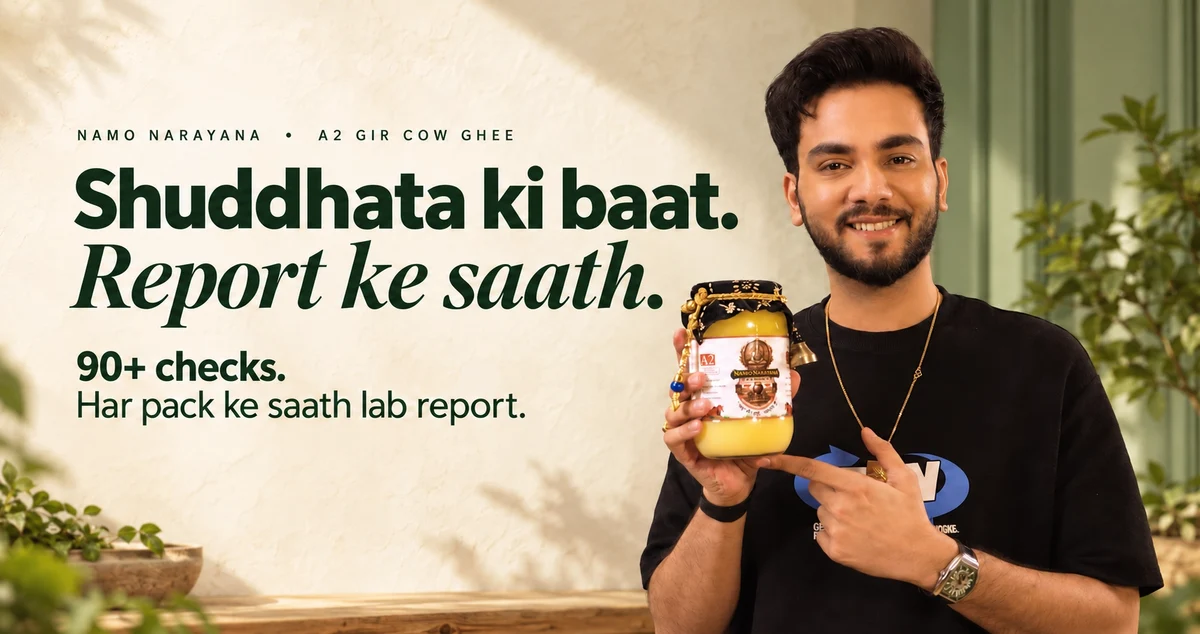
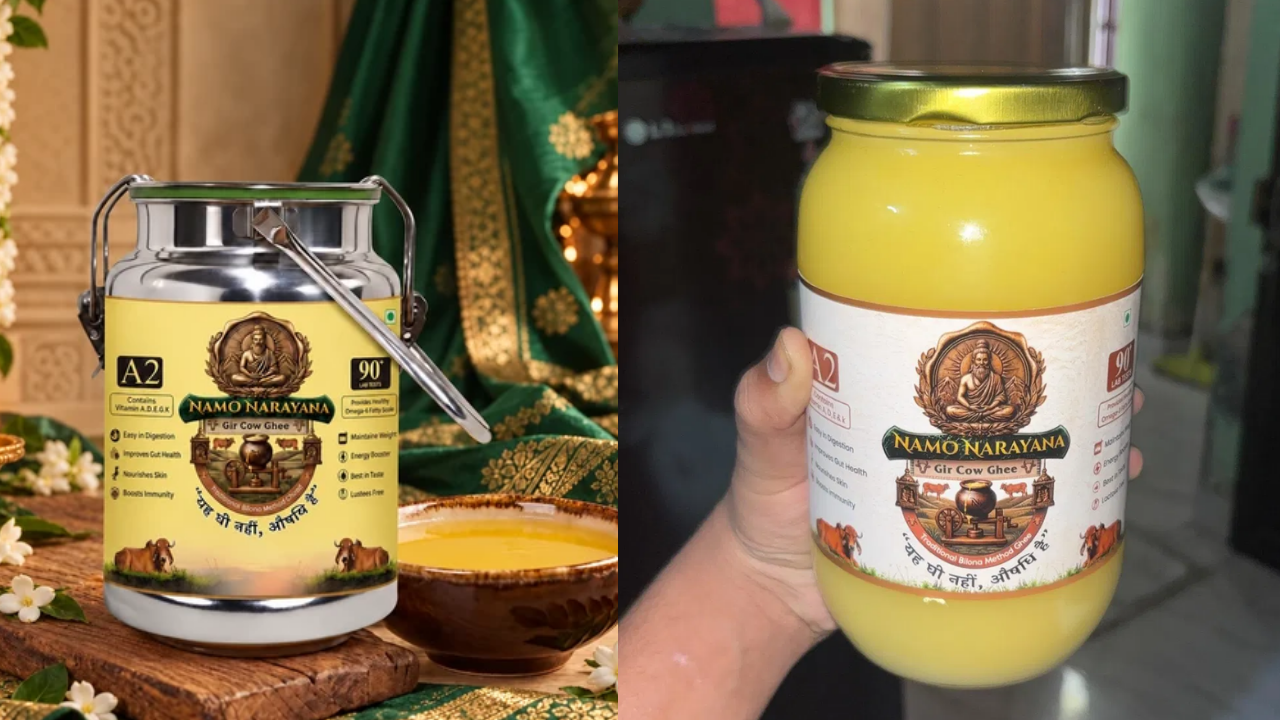
Finding unadulterated dairy products can be a massive challenge with rising consumer interest in clean eating, premium alternatives like Namo Narayana Ghee have entered the spotlight. Marketed as an authentic, high-quality A2 Gir cow ghee produced via traditional methods, it targets individuals seeking wellness through ancestral food choices.
Before you invest in a jar, it helps to understand its sourcing, manufacturing process, market valuation, and how it stack up against common grocery alternatives.
Namo Narayana Ghee Ingredients
True premium ghee requires absolutely no additives, industrial fillers, or preservatives. The ingredient list for Namo Narayana Ghee remains strictly singular:
- 100% Pure A2 Gir Cow Milk Fat
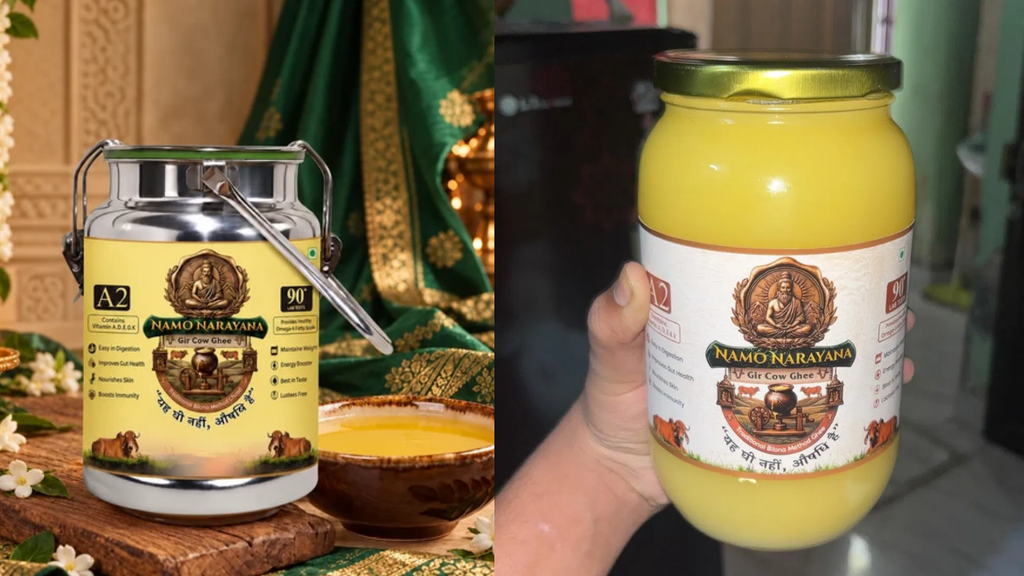
Foundational quality of this ghee relies entirely on the sourcing of its raw materials. A2 milk contains only the A2 type of beta-casein protein, which closely mirrors human milk and is structurally distinct from the A1 proteins heavily found in crossbred or European cattle variants. Additionally, the brand claims the use of the ancient Bilona method. Instead of extracting fat instantly via mechanical cream separators, the milk is first curdled, then hand-churned or slow-churned to obtain butter (makkhan), which is subsequently clarified over a low flame.
Namo Narayana Ghee Price
Because the Bilona method is structurally resource-intensive—requiring roughly 25 to 30 litres of pure A2 milk to yield a single litre of ghee—traditional variants carry a notable financial premium compared to industrial alternatives.
Average Market Price Range: ₹1,400 to ₹2,000 per litre (varies depending on specific packaging sizes, platform discounts, and seasonal sourcing shifts).
While this pricing is significantly higher than commercial standard options, it aligns directly with the broader, highly competitive premium domestic sector for certified A2 dairy products.
Desi Ghee vs Cow Ghee: Understanding the Difference
Consumers often confuse the labeling conventions found across standard supermarket aisles. Here is a direct breakdown of how these terms compare:
| Feature | Desi Ghee | Standard Cow Ghee |
|---|---|---|
| Source Animal | Can be derived from indigenous Indian cows (Desi cows) or native water buffaloes. | Exclusively derived from cows, but often including crossbred or exotic breeds (e.g., HF, Jersey). |
| Protein Structure | Typically contains A2 beta-casein when sourced from pure native Indian livestock. | Frequently contains A1 beta-casein or an A1/A2 mix from industrial farming. |
| Production Method | Historically linked to traditional curd-churning (Bilona), though commercial versions use cream. | Almost exclusively processed via high-speed industrial cream separation. |
| Flavor Profile | Deeply aromatic, grainy (danedar) texture with a distinctly rich, nutty flavor. | Mild flavor profile, uniform texture, and a lighter yellowish color. |
Best Ghee Brands in India (Premium & Commercial)
If you are currently evaluating your options in the Indian dairy space, market is broadly divided into two operational tiers:
| Premium & Traditional A2 Brands | Mass-Market & Commercial Standards |
|---|
Is It Worth Buying?
If you are simply looking for a budget-friendly cooking fat to use for high-heat frying, standard commercial options from brands will suit your kitchen perfectly. However, if your primary goal is maximizing nutritional intake, A2 protein intolerances, and enjoying the distinct aromatic, grainy texture of ancestral dairy,
Namo Narayana Ghee Official Website
To ensure you are getting genuine, laboratory-tested A2 Gir cow dairy products, it is highly recommended to purchase directly from the brand’s verified digital channels.
Buying from the manufacturer counterfeit third-party listings their full inventory sizes from 500ml up to 5 Litres. You can explore their entire Bilona method inventory and secure free pan-India shipping by visiting the Official Namo Narayana Store.