
Now Reading: Best Mineral Mixture for Dairy Cows: Complete NDDB Buying Guide
-
01
Best Mineral Mixture for Dairy Cows: Complete NDDB Buying Guide

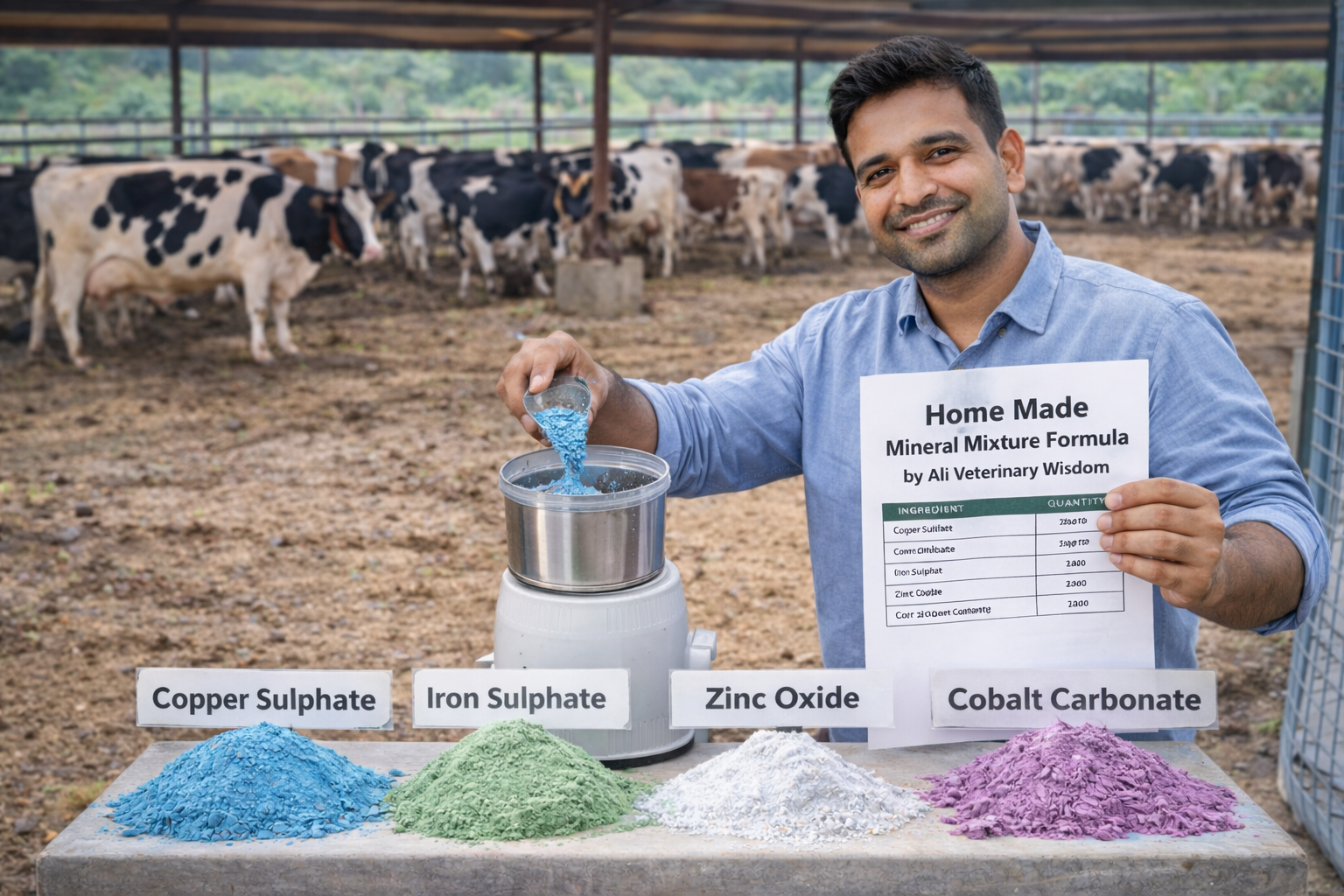
A good mineral mixture plays a critical role in dairy cattle nutrition guide strategies. Dairy cows require specific minerals for normal body functions, growth, milk production, reproduction, and overall herd health. However, not every supplement on the market is suitable for every animal or every farm.
Finding the best mineral mixture for dairy cows depends on several overlapping factors. These include the animal’s age, milk production, stage of lactation, and the nutrients already present in your local soil, grass, and feed.
For Indian dairy farmers, using an area specific mineral mixture nddb recommendation is particularly useful. Because mineral levels in soil, feed, and fodder vary drastically from one region to another, a one-size-fits-all approach does not work. This guide explains exactly what farmers must check before buying a mineral mixture and how to integrate it into a balanced daily ration.
Table of Contents
What Is a Mineral Mixture for Dairy Cows?
A mineral mixture is a specialized feed supplement designed to provide essential micro and macro minerals that may be missing or insufficient in an animal’s regular diet.
Dairy animals cannot manufacture minerals inside their bodies. Because ordinary local feed and fodder often fail to supply these nutrients in required quantities, supplementation is required as part of a balanced ration.
Minerals are generally divided into two broad groups:
- Major Minerals: Required in larger amounts. These include Calcium, Phosphorus, Magnesium, Sodium, Potassium, Sulfur, and Chloride.
- Trace Minerals: Required in much smaller quantities but still vital. Examples include Zinc, Copper, Manganese, Selenium, Iodine, Cobalt, and Iron.
The exact requirement depends on the animal and its complete diet. A mineral mixture should always be treated as a targeted supplement to the ration, rather than a replacement for high-quality fodder, energy, or protein.
Why Do Dairy Cows Need Mineral Mixtures?
Minerals support a wide array of biological functions in dairy cattle. They are directly involved in:
- Bone and teeth development
- Muscle function and metabolism
- Milk synthesis and reproductive efficiency
- Immune function, growth, and general health
According to the National Dairy Development Board (NDDB), proper mineral supplementation improves nutrient utilization, milk production, immunity, and the productive life of the animal.
⚠️ Farmer Alert: Do not view a mineral mixture as a magic product that instantly boosts yield on its own. If your cow is not getting enough energy, protein, crude fibre, or water from its primary feed, adding a mineral supplement will not solve the underlying nutritional deficit. A balanced ration always comes first.
How to Choose the Best Mineral Mixture for Dairy Cows
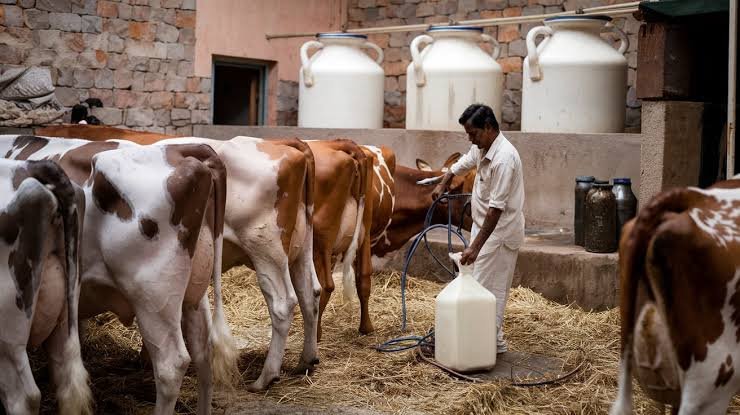
There are dozens of commercial brands available, but you should never buy a product simply because a neighbor uses it or because the packaging promises overnight results. Use these professional benchmarks to evaluate your options:
1. Prioritize an Area-Specific Formulation
Mineral levels in soil, crops, and fodder vary across states. For instance, fodder grown in Haryana has a completely different mineral profile than fodder grown in southern or eastern India. NDDB has developed an area specific mineral mixture nddb mapping formulation for different regions. Check with your local dairy cooperative, veterinarian, or animal husbandry department to get the formula mapped to your specific geography.
2. Verify the Mineral Composition on the Label
Do not get swayed by marketing buzzwords like “Premium Grade” or “Super High Yield.” Turn the bucket or bag around and inspect the label. Ensure it explicitly lists the percentages of Calcium, Phosphorus, Magnesium, Zinc, Copper, Manganese, Selenium, Iodine, and Cobalt. A long list of random ingredients is not necessarily better; what matters is whether the quantities match your herd’s dietary gaps.
3. Match the Product to Milk Production and Stage
A dry cow, a growing heifer, and a high-yielding lactating cow have vastly different nutritional requirements. High-producing cows face enormous nutrient drains during peak lactation.
To help you calculate daily requirements, the NDDB provides a structured feeding framework:
| Animal Category | General NDDB Daily Guidance |
|---|---|
| Calves | 20 – 25 grams / day |
| Heifers & Dry Animals | Approx. 50 grams / day |
| Milking Animals | 100 – 200 grams / day (scales up with milk production) |
4. Look for Verified Quality Marks
Always buy products from reliable manufacturers. Ensure the packaging clearly shows the manufacturing date, batch number, expiry date, storage instructions, and a complete ingredient list. Look for the NDDB Quality Mark on cattle feed and mineral mixtures, which ensures the manufacturer adheres to strict nutritional and manufacturing quality standards.
Can a Mineral Mixture Improve Cow Fertility and Increase Milk Production?
Farmers frequently ask how to increase milk production in cows and fix repeated breeding issues using supplements.
- The Fertility Link: Inadequate mineral nutrition is a leading cause of silent heat, delayed ovulation, and long inter-calving periods. Correcting a trace mineral deficiency (like Zinc or Copper) drastically improves reproductive efficiency. However, infertility can also be caused by poor heat detection, bad AI timing, energy deficits, or reproductive diseases.
- The Production Link: Mineral mixtures will increase milk production only if the cow was previously suffering from a nutritional deficiency. If your cow’s genetics, comfort, water intake, and protein-to-energy balance are poor, minerals alone cannot force the animal to produce more milk.
Mineral Mixture vs. Compound Cattle Feed: What’s the Difference?
These two products serve entirely different purposes in dairy cattle nutrition:
- Mineral Mixture: Supplies highly concentrated minerals (and sometimes specific vitamins). It contains zero energy, protein, or fibre.
- Compound Cattle Feed: A balanced mixture of concentrate ingredients like grains, brans, oil cakes, protein meals, and agro-industrial by-products. It provides the bulk of the cow’s daily energy and protein needs alongside baseline minerals.
A mineral mixture should supplement your feed strategy where regional or production gaps exist—it should never replace actual fodder or concentrate feed.
Common Mistakes to Avoid
- Over-Supplementation: Giving double the dose will not double the milk. In fact, excessive amounts of certain trace minerals can cause toxicity and harm the animal.
- Buying Solely on Lowest Price: A cheap mineral mixture price usually means the product contains low-grade, poorly absorbable mineral salts (like oxides instead of highly bioavailable chelates). Compare the formulation value, not just the cost per kilogram.
- Ignoring Storage Rules: Leaving mineral bags open in damp sheds ruins the product. Keep your supplements tightly sealed and dry to prevent clumping and nutrient degradation.
Quick Buying Checklist for Farmers
- Is the product formulated specifically for dairy cattle (not poultry or aqua)?
- Does the label clearly display the exact composition breakdown?
- Are the exact feeding dosages clearly mentioned?
- Is there an official area-specific option available for your district?
- Is the product well within its expiry date?
- Does the manufacturer carry a verified quality seal (like the NDDB Quality Mark)?
Final Takeaway
The ideal mineral mixture is not the most expensive one or the one with the loudest advertising claims. It is the one that accurately fills the specific nutritional gaps of your cow, your region, and your feeding system. Treat it as one crucial pillar of a holistic management strategy that includes clean water, high-quality forage, proper housing, and regular veterinary care.
Unlock the Ultimate Dairy Farm Profit Secret!
Are you tired of low milk yields, high feed costs, and expensive veterinary bills for cows that fail to get pregnant? Correcting your herd’s nutrition can instantly transform your dairy business margins.
Take control of your farm’s success with our comprehensive Dairy Cattle Nutrition Guide. This premium, easy-to-read information guide gives you step-by-step masterclasses on ration balancing, regional feed formulas, and cost-cutting feed secrets used by top commercial dairies.
👉 [CLICK HERE to Complete Dairy Cattle Nutrition Guide Today and Maximize Your Milk Profits!]